
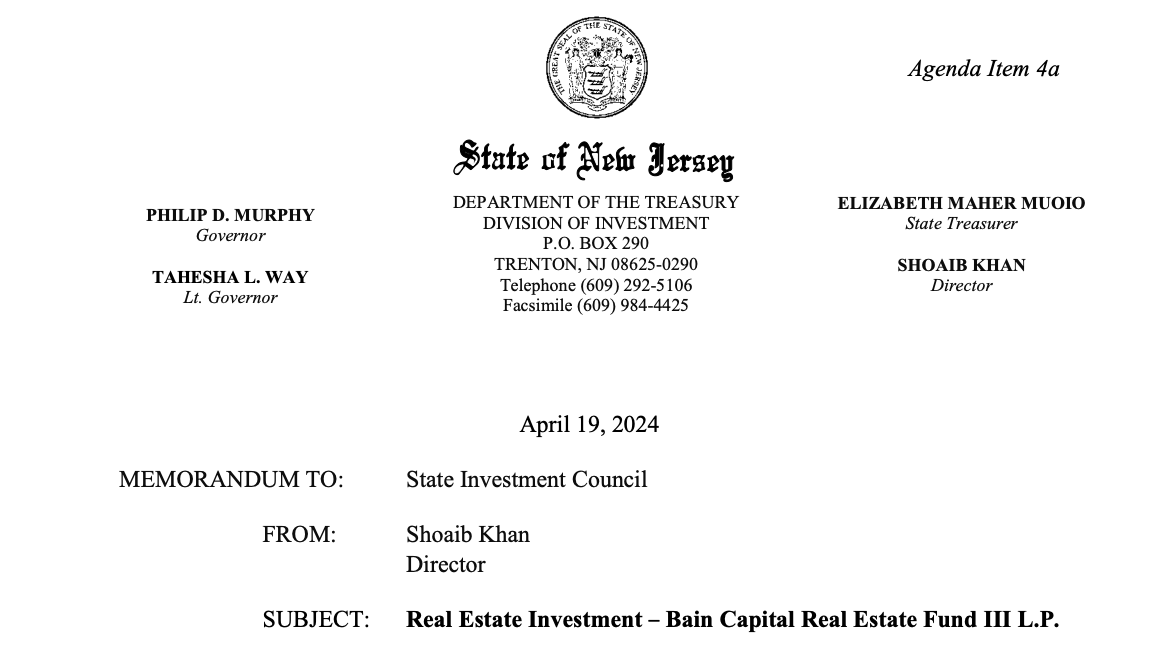
Setting the example? How a mid-sized manager bucked the trend.
Bain Capital just hit a big milestone in closing its third value-add fund with $3.4B in commitments.
A few hundred million short of Bain's goal but more than Fund II and a huge feat in this market.
---- Bain's playbook ----
Here's what separated Bain and could chart a path for other managers...
1. Sensible thesis
Betting on secular demand drivers including: aging of America, urbanization, penetration of technology and decreased home ownership.
Property types: medical outpatient buildings, senior housing, infill industrial (last-mile logistics), self-storage, golf courses, and horizontal apartment development.
2. Track record
As of a two years ago, the first fund (2017) was on track to deliver 19% IRR and 1.4x multiple with the second fund (2020) pacing toward 4% and 1.1x. Wouldn't be surprised if these returns faded since this IC report due to longer holds and lower values.
3. Proven team with a big co-invest
Bain's investment team consists of ex-Harvard Management Co. managers, who have worked together for many years. The fund also invested more than $300M in GP co-investment, which is a rarity for $1B+ plus funds. 1.5% fees + 20% over 8%.
4. Aligned ownership
Bain is a private partnership. No outside owners or shareholders. The co-investment comes from partners who manage the firm. i.e., they get rich(er) from performance, not necessarily from building the biggest possible business.
---- Takeaway ----
Bigger doesn't necessarily mean better.
Investment manager consolidation doesn't mean that only the biggest firms win. Bain seems geared more toward performance than AUM-chasing and investors obviously took notice.
Read the State of New Jersey's Memo to the Investment Council Here.
COMMENTS